There have never been so many satellites orbiting Earth as there are today, thanks in part to the launch of mega constellations like SpaceX’s Starlink internet service – and now we are learning just how the sun’s activity can affect them.
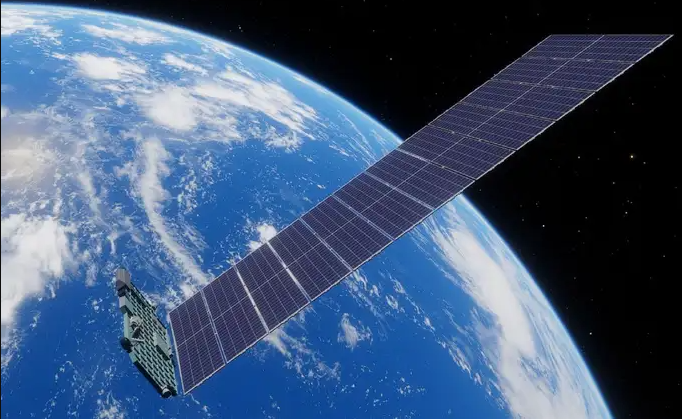
Eruptions from the sun are shortening the lives of satellites in Earth orbit, particularly large constellations like SpaceX’s Starlink – which could be both beneficial and a cause for concern.
The sun goes through an 11-year cycle of activity, peaking with a period known as solar maximum, which most recently occurred in late 2024. During these periods, increased eruptions from the sun can create geomagnetic storms that heat our planet’s atmosphere, causing it to swell outwards in size and increasing drag on satellites.
Now, Denny Oliveira at NASA’s Goddard Space Flight Center in Maryland and his colleagues have investigated how much of an effect this was having on Starlink. “We found that when we have geomagnetic storms, satellites re-enter faster than expected [without solar activity],” he says. During solar maximum, the lifetime of a satellite could be reduced by up to 10 days, the researchers say.
This effect is only becoming apparent now because of a boom in satellite launches, particularly by SpaceX. There are more than 7000 Starlink satellites orbiting Earth, providing a space internet service on the ground. New satellites are constantly being added to the constellation, with launches taking place almost every week. SpaceX plans to have maybe more than 30,000 orbiting satellites in the future.
But there are also several re-entries each week, and the constellation is constantly replenished. “It’s the first time in history we have so many satellites re-entering at the same time,” says Oliveira. Between 2020 and 2024, 523 Starlink satellites were tracked re-entering our atmosphere, where they are designed to entirely burn up. “In a few years, we will have satellites re-entering every day,” says Oliveira.
Some Starlink satellites are purposefully lowered into the atmosphere at the end of their life, while others fall naturally under atmospheric drag when they fail. Oliveira found that during the most severe recent geomagnetic events, when 37 Starlink satellites re-entered, satellites orbiting below 300 kilometres re-entered after around five days, down from more than 15 days.
“This is the first solar maximum that we’ve had in the mega constellation era,” says Samantha Lawler at the University of Regina in Canada. “So it is important to do these measurements.”
Sean Elvidge at the University of Birmingham, UK, says this effect could benefit satellite operators like SpaceX by removing dead satellites from orbit more quickly that could otherwise pose a danger to other satellites. “It’s speeding up that process,” he says. However, it could limit our ability to operate satellites in orbits below 400 kilometres, known as very low Earth orbit. “It shows that could be challenging,” he says.
There is also a possibility that quicker re-entries could make it less likely that the satellites will completely burn up in Earth’s atmosphere, says Oliveira. “You could have a chance of an object reaching the ground,” he says.
In August 2024, a 2.5 kilogram piece of a Starlink satellite was found on a farm in Saskatchewan, Canada, the only known instance of any piece of Starlink satellite surviving re-entry according to SpaceX. Lawler, who lives in Saskatchewan, says she worries that more satellite debris might have made it to the ground elsewhere.
“This is the easiest place in the world to find Starlink debris,” she says, because the land is so flat and open, and it is under the densest part of satellite paths in the constellation. “If we found one [piece] here, how many did we miss?”
Source: arXiv DOI: 10.48550/arXiv.2505.13752